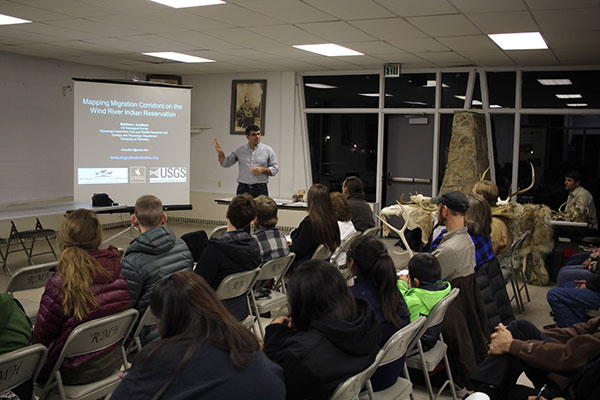
Q. What is the highlight of your career? A. Seeing public engagement around our migration work through the Wyoming Migration Initiative
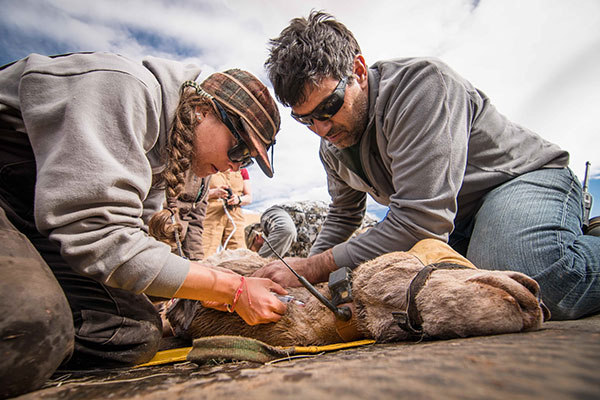
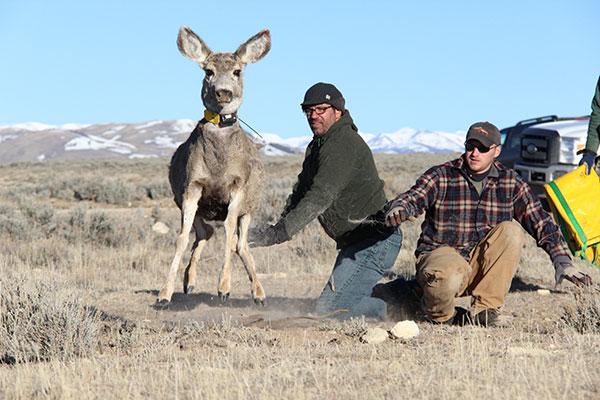
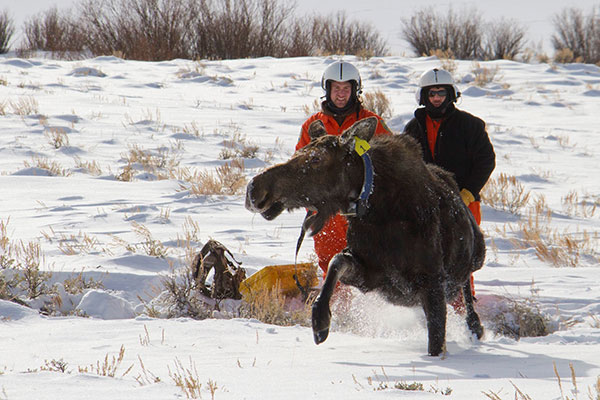
Q. What are challenges you encounter in your career? A. There are many. Capturing wild animals under extreme winter conditions. Coordinating with managers and landowners. Navigating Wyoming politics around the impacts of oil and gas development, climate change, etc.
Q. How did you get to this career? A. In graduate school I was studying a forest pathogen. But then, I became fascinated by the plight of peregrine falcons in California that had recovered from DDT-induced eggshell thinning. This started out as a simple class project, but led to 2 scientific papers several years later. We were pursuing this mystery of how peregrine falcons recovered despite not being able to reproduce, exploring the role of captive breeding. I basically taught myself many of the basics of wildlife biology while trying to solve this puzzle. This launched me into wildlife biology.
Q. What is something unique about your career most people might not know or understand about what you do? A. I spend a lot of time working with professional cartographers. Making beautiful maps of ungulate migrations has become a really important part of our work. I have no formal training in this.
Q. Are there scholarship or internship opportunities available with your career? If so, where can more information about those be found? A. Yes, we have had numerous undergraduates at UW do internships. There are lots of scholarship opportunities, but those are spread across the internet. A place to start is Wyoming TWS. https://wildlife.org/wyoming-chapter/